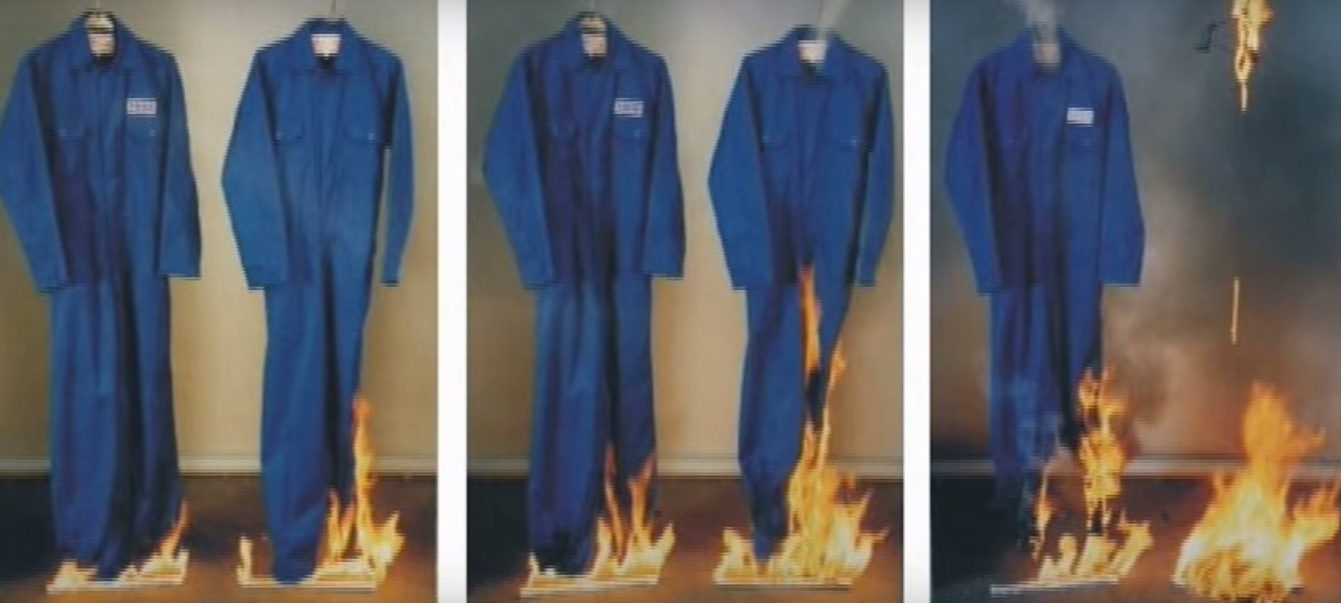
Mankind has over the last 6000 years multiplied, spread out and tamed nature. Studying nature, he learned to tame it and exploited it to the fullest.
Adam was commanded by god to turn nature into a garden for his food and mountains into mines for his metal tools. With the help of tools man was able to mine the earth, the plants and the animals nature freely provided for him. Nature gave man wood to build with, paper to write on and leather to wear.
Like picking fruit from trees, man picked silk from silkworms, cotton from plants, wool and leather from animals and glass and metals from stones. Nature freely and unconditionally provided man with all the material he needed; the air, water and rocks with the plant and animals living on them.
Using carbon as a backbone and dressing it up with hydrogen (H), oxygen (O), nitrogen (N), and a sprinkling of a few other atoms, Nature created mushy structures that could temporarily sustain life. Dead plants made up of mostly carbohydrates when buried deep underground decays until only the carbon backbone and the hydrogen are left.
The carbohydrates, foods for animals, decays into the hydrocarbons, fuels for machines. These seas of fuel lay undiscovered until the machines evolved to uncover them. Once the machines got big and strong enough to dig deep enough, they dug like hungry dogs digging after a buried bone and like thirsty mosquitoes sucking blood. They eventually uncovered seas of energy rich hydrocarbon oils that were once jungles of carbohydrates millions of year ago. What was once food for animals evolved into food for machines.
Like painters mixing colors for a painting, chemists have been mixing raw materials from stones, plants and animals, and creating mixtures of them in repeating attempts to improve on nature. Very soon on after man started to mix materials, he was able to produce very many new materials, some of which are listed below:
Materials with exceptional properties:
- Carbon fiber is an extremely strong and light fiber-reinforced plastic polymer which contains carbon fibers.
- Glues are molecules with very rough surfaces, stick together like burrs from plants or Velcro from chemists.
- Teflon. When chains of carbon atoms are covered by a coating of Fluorine atoms instead of Hydrogen atoms, Teflon, a very smooth and thus non sticky material is produced. Gore-Tex is produced when Teflon strands are woven into a sheet with micro pores. The fabric is as smooth and impervious to water molecules as mirror is to light because its very smooth surface does not tear and break up water droplets. At the same time, its pores allow individual water vapor molecules in the air called humidity to pass through.
Carbon and its heavier and more active cousins tin and lead form bonds with many metal atoms and enhance their properties.
- Iron with carbon forms steel. The amount of carbon absorbed by the iron determines its hardness and brittleness. Too little carbon makes the steel too soft and crumbly, too much makes it too brittle.
- Steel with chromium forms stainless steel.
- Copper with zinc forms brass.
- Copper with tin forms bronze.
- Lead with tin forms solder.
Leather, Wool, Silk
Nature is an expert at making different materials and optimizing them for different environments.
- Leather is produced by removing the flesh, fat and sometime the hair from animal skins and furs. Tannin an acidic compound from oak and fir trees are used to make rawhide resistant to decomposition.
- Wool is a fibrous protein from the hairs of various animals. Cashmere and mohair is made from goats, angora from rabbits, and other types of wool are made from sheep, alpacas and camels.
- Silk, one of the strongest natural fibers, is a protein fiber made from the cocoons of the larvae of the mulberry silkworm. Its triangular prism-like structure allows silk cloth to refract light at different angles producing a shimmering appearance of different colors.
Ceramics, Concrete and Glasses
Man is an expert at making different materials and optimizing them for different uses.

Chemists have learned from nature how to mix different types of rocks and how to bake them like they were baking breads. The calcium carbonate (CaCO3) from sea shells cements the clay for ceramics and the sand and gravel for concrete together much like starch cements wheat in breads.
Like the different pastries and breads, man makes different fake rocks, such as for example glass and breast implants and plastics.
Silicate fibers
- Silicon, the heavier and more active cousin of carbon forms similar materials to those that carbon forms. Just as C is the backbone of life, Si is the foundation of computers. While C forms diamonds, Si is more active and its bonds form glass. Si, like her lighter and more stable cousin C form fibers.
- Asbestos is a silicate mineral having thin fibrous crystals. It was used for making fire resistant insulating cloth until it was discovered that breathing in the fibers was very deadly.
- Rock wool is made by blowing air thru molten rock fibers, the same way that cotton candy is made.
- Fiberglass is a fiber reinforced polymer made of a plastic matrix reinforced by fine glass fibers made from silicon. It is a lightweight, extremely strong, and robust material, and is used for many products that are easily formed using molding processes. It is much cheaper than carbon fiber products. Common uses include high performance aircraft (gliders), boats, automobiles, baths, hot tubs, septic tanks, water tanks, roofing, pipes and surfboards.
Polymers
With the aid of chemists, long chains of molecules are connected to make long fibers that can be woven into textiles.


Polyesters, PES, are made by joining acids with alcohols. When the acids are straight chained with acid heads on both ends and the alcohols are straight chained with alcohol heads on both ends, they can be joined together to form endless fibers that can be woven into textiles so durable as to produce bullet proof Mylar clothing.

Polyamides (Nylons), PA, is a chain with repeating -NOC6H10- units. Imitating nature's production of polyamides such as wool, silk and proteins, chemist make polyamides called nylon. Adding nitrogen with oxygen to carbon chains allows extremely thin and strong fibers to be made which are ideal for ultra-thin stockings, fishing lines, brush bristles and even car engine moldings. They make fibers and textiles that can be so durable as to produce Kevlar that weaves into body armor 5 times stronger than steel.

Acrylic fibers are a chain with repeating -NC3H3- units. Adding nitrogen atoms allows extremely thin fibers to be made that are like wool and are used to enhance wool, cotton and paints.
Paper, Fiber cement, Cotton, Linen, Burlap, Canvas, Cellophane and Rayon
Chemists have learned from nature how to use cellulose from plants (a polymer of glucose) to make many types of fibers, fabrics and textiles.

Cellulose is the most abundant polymer in nature. It is found in plants from the grasses to the trees. Wood uses lignin to bind and stiffen the cellulose strands.
The single unit of cellulose is the glucose molecule, called grape sugar or blood sugar. Linking 2 of these glucose-units turns them into table sugar and honey. Repeating that chain linking turns them into starches and then eventually into cellulose.
- Yeasts or other fungi turn cellulose into alcohol and then eventually into vinegar.
- Adding sulfur to cellulose turns them into keratin found in skin, hairs and feathers.
- Adding other minerals and nitrogen turns them into chitosan for the exoskeletons of insects, crustaceans and marine animals.
- Paper is moist fibers of cellulose pressed together and allowed to dry into thin sheets. When the paper is thin it is called tissue paper. When it is thick, it is called cardboard.
- Fiber cement (cement board) commonly used for roofs is a combination of cement and reinforcing cellulose fibers.
- Cotton is a soft, fluffy fiber of almost pure cellulose that grows in a protective capsule around the seeds of cotton plants.
- Linen is a very high quality textile weaved from the fibers of the flax plant.
- Burlap is a woven rough fabric usually made from skin of the hardy jute plant and is used to make ropes, nets and bags.
- Canvas made from hemp fiber is an extremely heavy-duty fabric used for making sails, tents, backpacks and other items for which sturdiness is required. It is also popularly used by artists as a painting surface.

Cellulose is dissolved in lye (NaOH) and carbon disulfide (CS2) to make viscose used to make cellophane and rayon.
- Cellophane is viscose extruded thru a slit to produce a sheet of film. Glycerin is added to prevent the film from becoming brittle.
- Rayon (artificial silk), is viscose extruded thru a hole to produce a fiber which is weaved into a cloth.
Linoleum

Inspired by nature's fossilized tree resin called Amber, chemists have created Linoleum. The main ingredient is solidified flax seed oil from the linseed plant which provides fibers to make linen. Pine resin, ground cork dust, wood chips and CaCO3 are added and the mixture is allowed to harden on a burlap or canvas backing. The resulting material is very durable and flexible. It makes attractive floors that are cheap and easy to install, long lasting and easy to clean.
Rubber

Rubber is hydrocarbon chains joined side to side by sulfur atoms causing a material that is elastic. Sulfur atoms have the similar shapes and properties to oxygen atoms which join hydrocarbon chains together end to end causing a material that is strong.
Plastic

The earth was mined deeper and deeper, until oil called black gold was found. The oil was produced millions of years ago from decaying plants that were under great pressures and temperatures deep under the earth. The once richly dressed carbon chains called carbohydrates, decorated with oxygen were stripped naked until they contained only hydrogen and became chains called hydrocarbons.
Chemists saw the opportunity to play god in resurrecting the naked hydrocarbons by dressing them up again, like they once were when they were a part of life. These new materials could be molded into any shape; so they were called “plastics”. Chemists dressed these naked hydrocarbons chains with atoms in ways nature had not yet tried and they made many different kinds of plastics. Like the life from which plastics originated, they were basically all the same; and yet all very different.
Due to their relatively low cost, ease of manufacture, versatility, and imperiousness to water, plastics have, like stubborn weeds, displaced many traditional materials, such as wood, stone, bone, leather, metal, glass and ceramic. Plastics are resistant to acids because they are nonpolar like oil is.
Like the life they originated as, there are as many different plastics with different properties. Depending on where the single, double and triple bonds are along the chain and depending on where any additional atoms like benzene rings, nitrogens, oxygens, chlorines and fluorines are hanging from it, determines the properties that the plastic has and if it can be recycled or remolded into other shapes or not.
Polyethylene, PE, is a chain with repeating -CH2- units. They have a wide range of inexpensive uses like supermarket bags and plastic bottles.
Polypropylene, PP, is a chain with repeating -C3H6- units. By replacing half of the H atoms in PE with CH3s, PP is formed. They make good bottle caps, and are strong enough for pressure pipes and car fenders.
Polyvinyl chloride, PVC, is a chain with repeating -H2C2HCl- units. By replacing some of the hydrogens in PE with Chlorine atoms, the plastic becomes chemically resistant, light in weight and cheap. They make good plumbing-pipes and guttering, shower curtains, window frames and flooring. The material's properties are so outstanding as to allow it to be molded with tiny scratches encoding all the sounds of an orchestra and choir playing for 15 minutes on the size of a plate.
Adding more chlorine allows extremely thin yet very tough sheets like Saran wrap to be produced that is ideal for food packaging.
Polystyrene or Styrofoam, PS, is a chain of carbon with hanging benzene rings that are like bubbles of air. It is used for foam packaging to insulate against shock and temperature. It makes great food containers, disposable cups and plates and CD boxes.
Acrylonitrile butadiene styrene, ABS, is a blend of acrylic fibers and Styrofoam. It makes a material light and durable for housing electronic equipment and strong and durable for making drainage pipes and toys.
Polyethylene terephthalate polyester, PET, is a chain with repeating -C10H8O4- units They contain Os for strength and benzene rings that are like windows to light making them transparent. They are used in carbonated drinks bottles, plastic film and microwavable packaging.
Polycarbonate, PC, is a chain with repeating units shown above. Saturating the carbon chain with Os results in a highly transparent and highly resilient and shatterproof material ideal for compact discs, eyeglasses, riot shields, security windows, traffic lights, roofs and lenses.
Polyurethanes, PU, is a chain with repeating units shown above. Replacing O by N in a polycarbonate (PC) fiber gives it a structure ideal for shock and thermal insulation making it the most used plastic in cars. By dressing carbon chains appropriately, materials can be made with any properties desired.


Chemists mix and glue different materials together to imitate materials that are made by nature. But they are not successful all the time. The tensile strength of spider silk is greater and more elastic than that of steel. An ant's brain functions better than any computers can and with less energy.
More and more of our body parts are being replaced by plastics. Once man-made poly amides replace nature made poly amides then mankind will face the prospects of finding himself in a plastic body that could be resurrected to a new one at his will. This opens a door to immortality and raised questions about its immorality.